
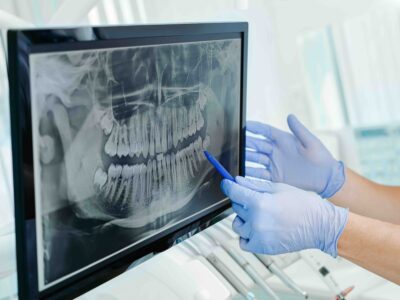
A tooth extraction is the removal of a tooth that can no longer be saved or that is crowding the teeth around it. The cost is not one number. It is a set of decisions about how the tooth is sitting in the bone, what imaging is needed to see it, and what kind of anesthesia the procedure calls for, and each of those decisions moves the figure.
National cost data published by CareCredit puts a simple extraction at an average of $177, within a range of $137 to $335, while a surgical extraction averages $363 within a range of $281 to $702. The spread between those two categories is the single largest variable most patients encounter, and which category a tooth falls into is decided by anatomy rather than by preference.
Here at Oaks Dental, our lead doctor, Dr. Kourosh Keihani, has practiced for nearly three decades, and we plan extractions with 3D Cone Beam CT imaging so the root position and the surrounding bone are visible before anything begins. Knowing what a tooth is doing under the gum is what keeps a procedure predictable, and predictability is what keeps a treatment plan honest.
If you have been told a tooth needs to come out and you want the number explained rather than quoted at you, contact us or call (818) 431-2000, and we will walk you through what your case actually involves.
What Does a Tooth Extraction Cost, and Why Is the Range So Wide
The published ranges look wide because they are covering very different procedures under one word. Pulling a fully erupted tooth with a straight root is a different piece of work from sectioning an impacted molar out of bone, and the pricing reflects the time, the imaging, and the technique involved.
Here is how the national figures break down by category:
| Extraction type | National average | Typical range | What makes it this category |
|---|---|---|---|
| Simple | $177 | $137 to $335 | Tooth is fully erupted and can be gripped and lifted |
| Surgical | $363 | $281 to $702 | Tooth is broken at the gumline or the root needs access |
| Soft tissue impaction | $423 | $325 to $829 | Tooth is covered by gum tissue but not by bone |
| Full bony impaction | $532 | $413 to $1,041 | Tooth is fully encased in bone and must be uncovered |
| Complicated impaction | $835 | $639 to $1,620 | Root position or nerve proximity complicates access |
Treat these as national context rather than a quote. They are averages drawn across the whole country, so local pricing can sit above or below them, and no figure on this page reflects a specific case. What a category tells you is roughly how much work a tooth represents, which is a more useful thing to understand than a single number.
It is worth noticing how much the categories overlap. The top of the simple range sits close to the bottom of the surgical range, which means a tooth near the boundary can reasonably be priced either way depending on what the imaging shows. That overlap is not a pricing inconsistency. It is the honest reflection of teeth that do not read cleanly as one thing or the other until they are properly assessed.
How Does a Dentist Decide Between a Simple and a Surgical Extraction?
This is the decision that moves your number the most, and it is made from imaging rather than from a glance. Three things determine which side of the line a tooth falls on.
How much of the tooth is above the gum
A tooth with a solid, fully erupted crown can usually be loosened and lifted out in one piece. A tooth that has broken at the gumline, or that has been hollowed out by decay, gives nothing to grip, so access has to be created. That single difference is often what separates a simple extraction from a surgical one.
What the roots are doing under the gum
Roots are rarely the neat cones people picture. They can curve, splay, or wrap around bone, and a molar may have three of them heading in different directions. Curved or divergent roots often mean the tooth is sectioned into pieces and removed in parts, which takes longer and is priced accordingly.
What sits next to the tooth
Lower molars sit near the inferior alveolar nerve and upper molars sit near the sinus. When a root is close to either, the approach becomes more conservative and more deliberate. This is where 3D Cone Beam CT imaging earns its place, because it shows those relationships in three dimensions rather than leaving them to be inferred from a flat x-ray.
What Else Appears on the Bill Besides the Extraction Itself
The extraction fee is rarely the whole invoice, and this is where two quotes for the same tooth can look very different. Knowing the components lets you compare like with like.
- Examination and imaging. An evaluation and radiographs are usually billed separately from the extraction. A 3D scan costs more than a single film and shows considerably more.
- Anesthesia and sedation. Local anesthetic is typically bundled. Sedation is not. CareCredit puts sedation at an average of $349 and general anesthesia at an average of $639.
- Bone grafting. If the socket is being preserved for a future implant, a graft is placed at the same visit and billed as its own procedure.
- What replaces the tooth. An extraction leaves a gap. Whether that gap is restored, and how, is a separate treatment plan with its own cost.
That last point is the one patients most often discover late. If the tooth being removed is visible when you smile or is doing real chewing work, the honest conversation is about the extraction and the replacement together, not the extraction alone.
How Should You Compare Two Extraction Quotes?
If you are holding two numbers that differ by a few hundred dollars, the gap is usually explained by one of three things rather than by one office being better value than another.
Check whether the same category is being quoted
One office may be quoting a simple extraction and another a surgical one for the same tooth, because they have looked at it with different imaging. The more thorough assessment often produces the higher number and the more accurate one.
Check what is bundled and what is separate
A lower headline figure that excludes imaging, sedation, and a graft can land higher than a fuller quote that includes them. Ask for the itemized components rather than the total, and compare line by line.
Check what happens if the tooth does not cooperate
Ask what changes if a simple extraction becomes surgical partway through, because it sometimes does. An office that has already answered that question in the treatment plan is one that has thought about your case rather than priced a procedure code.
For patients who want the cost conversation handled up front rather than at checkout, our membership plan sets out what preventive care includes, which is a different conversation from a single procedure but often the more useful one.
Where Calabasas Patients Should Start
A tooth that needs to come out is rarely an isolated event. It is usually the visible end of something that has been developing for a while, and the decisions made around it, including whether the space gets restored, shape what the next several years of that side of your mouth look like.
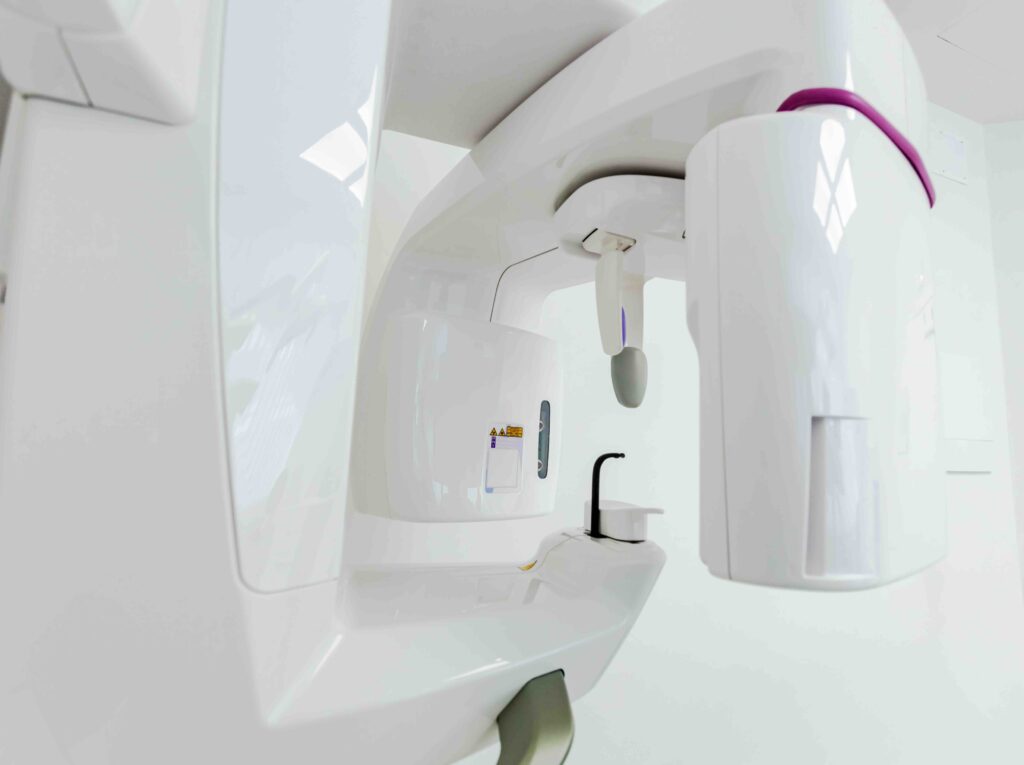
That is why we do not quote an extraction over the phone. We evaluate the tooth, image it properly, and explain which category it falls into and why, so the number you are given is one you can actually understand and plan around. Candidacy and approach depend on findings from an in-person examination, and no article can substitute for that.
Concierge care, in a practical sense, means the explaining happens before the treatment rather than after the invoice. You should know which category your tooth falls into, what the imaging showed, what is bundled and what is not, and what the plan is for the space afterward. Here at Oaks Dental, we have that conversation first, because it is the part that makes the number make sense.
If a tooth is causing you trouble, or another office has recommended removal and you would like a second opinion before committing, our tooth extraction care and our wider dental services are built around getting that answer right the first time. Where a tooth can be saved with a same-day digital crown instead, we would rather tell you that.
Call us at (818) 431-2000 to schedule an evaluation.
Medical Disclaimer: This content is provided for general informational purposes only and does not substitute for an in-person evaluation by a licensed dentist. Individual results and costs vary based on the patient’s oral health, anatomy, imaging findings, and treatment plan. Cost figures cited are national averages published by third parties and are not a quote or an estimate for any specific case. Reading this page does not create a dentist-patient relationship.
Frequently Asked Questions
What is the average cost of a tooth extraction in Calabasas?
There is no single Calabasas figure, because the price follows the procedure rather than the ZIP code. National averages published by CareCredit run from $177 for a simple extraction to $835 for a complicated impaction, and local pricing can sit above or below a national average. The only way to get a number for your tooth is an examination with imaging, because that is what determines which category the extraction falls into. We are happy to explain the components before any treatment is agreed.
What is considered a simple tooth extraction?
A simple extraction is one where the tooth is fully erupted, structurally intact enough to be gripped, and can be loosened and lifted out without cutting gum tissue or removing bone. It is generally performed with local anesthetic. If the tooth fractures during the procedure or the roots prove more curved than expected, the same appointment can become a surgical extraction, which is why it is worth asking in advance how that situation is handled.
How much does a tooth extraction cost at an oral surgeon?
Costs at an oral surgeon are often higher than at a general practice, largely because the cases referred there tend to be the more complex ones, such as full bony impactions and teeth close to a nerve. The relevant comparison is not the practitioner but the complexity of the tooth. A general dentist with 3D imaging can often handle cases that would once have been referred, and can tell you honestly when a referral is genuinely the better path.
How much should a tooth extraction cost if I have dental insurance?
CareCredit notes that most dental plans offer coverage for extractions and that a plan may cover 50% to 70% of the cost, though coverage depends entirely on your specific policy, your deductible, and whether the extraction is classed as basic or surgical. Coverage percentages, annual maximums, and waiting periods all vary. Ask your carrier for a pre-treatment estimate rather than relying on a general figure.
What is the out-of-pocket cost for a tooth extraction?
Your out-of-pocket amount is the procedure cost plus any separately billed components, minus whatever your plan pays. The components most often billed separately are the examination, radiographs or a 3D scan, sedation if used, and bone grafting if the socket is being preserved. Asking for an itemized plan rather than a single total is the most reliable way to understand what you will actually pay.
How much does a single wisdom tooth extraction cost?
Wisdom teeth span the full range, because they may be fully erupted, partially covered by gum, or completely encased in bone. Using the national averages above, a fully erupted wisdom tooth can sit near the simple extraction figure, while a full bony impaction averages $532 and a complicated impaction averages $835. Imaging is what tells you which of those situations applies, and it is worth doing before any figure is discussed.
Does the cost include replacing the tooth afterward?
No. An extraction and a replacement are separate treatments with separate costs. If an implant is planned, a bone graft may be placed at the extraction visit to preserve the socket, and that is billed as its own procedure. When a tooth is visible or load-bearing, it is worth planning the extraction and the replacement together so the total is clear from the start rather than arriving in stages.
How long before I can eat normally after a tooth extraction?
Recovery varies by person and by how involved the extraction was, so treat any timeline as general guidance rather than a rule. Soft foods for the first few days and avoiding the extraction site while it closes is the usual pattern, with most people returning to a normal diet over the following week or two. Your dentist will give you aftercare instructions specific to your case, and those instructions take precedence over anything you read online.
 Clear Aligner Costs in Calabasas: A Transparent Breakdown (And Why You Don’t Need Insurance to Start)