
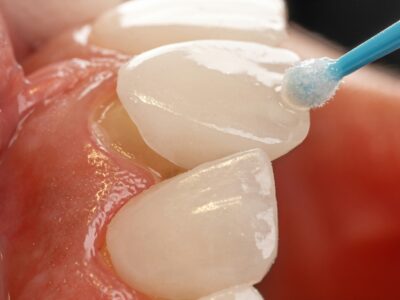
Yellow teeth are one of the most common reasons patients across Calabasas, Hidden Hills, and the western San Fernando Valley start asking about cosmetic dentistry. The frustrating part is that yellowing is not a single condition. The American Dental Association classifies tooth discoloration as extrinsic, intrinsic, or a combination of both, and those two categories do not respond to the same treatment.
That distinction explains a familiar experience. You can work through a box of whitening strips and see almost nothing change, not because whitening never works, but because the product was aimed at the wrong layer of the tooth. Here at Oaks Dental, we identify what is causing the color before we recommend anything, because the cause is what decides the treatment.
Surface stains sit on the outside of the enamel and can often be reduced mechanically. Stains that live inside the tooth need a chemical reaction to change the color at all, and a few of those resist even that. Knowing which one you have is the difference between a result and a wasted few months.
If your teeth have gone yellow and you want to know what kind of yellowing you are dealing with before you spend anything on it, contact us or call (818) 431-2000.
Here is how the two types tell themselves apart, and what each whitening option can realistically do about them.
How Yellow Is Normal, and What Changes Over Time?
A tooth is not a solid white object. Enamel, the outer layer, is translucent rather than opaque, and what you see through it changes as you get older. Some degree of yellow is simply anatomy showing through, which is why the goal of a good whitening plan is rarely the whitest possible shade.
The Natural Color Sitting Underneath the Enamel
Beneath the enamel is dentin, which is naturally yellower than the surface above it. The ADA lists aging as a common cause of intrinsic discoloration, noting that with increasing age enamel becomes thinner and more translucent, which allows the yellower dentin to show through so the overall tooth color may darken.
That means a gradual, even warming of tooth color over the years is often not a stain at all. It is the enamel getting out of the way. Whitening can still improve it, but the starting point matters and so does the expectation.
Why Whitening Will Not Change Every Surface in Your Smile
The ADA is direct on this point: only natural teeth can be whitened, not tooth-colored restorations. If you already have a crown, a veneer, an implant, or a tooth-colored filling in the visible part of your smile, a bleaching gel will lighten the natural teeth around it and leave that restoration exactly the shade it was made.
This is one of the most common surprises in cosmetic dentistry, and it is entirely avoidable. Identifying and documenting existing restorations before whitening begins is part of a proper exam, because the plan may need to include replacing or re-matching a restoration afterward.
Signs Your Yellowing Is Sitting on the Surface of the Enamel
Extrinsic staining is the more forgiving of the two categories. The ADA describes it as an accumulation of colored compounds on enamel, primarily associated with environmental factors or individual behaviors. If the pattern below sounds like your teeth, the color is probably sitting on the outside.
Yellowing That Tracks Your Coffee, Tea, and Red Wine Habit: A Sign of Extrinsic Staining
The ADA names highly pigmented foods and beverages directly, including dark fruits, red wine, coffee, tea, and cola drinks. If the color deepened over a period when your daily coffee count went up, or after you started drinking red wine more regularly, the pigment is most likely sitting on the enamel surface rather than inside the tooth.
Extrinsic stains vary widely in color and severity, and they tend to build gradually rather than appear at once. That slow build is part of why people often do not notice until a photograph shows it.
Color That Lifts After a Cleaning and Then Creeps Back: A Sign of Accumulated Surface Pigment
A useful test costs you nothing. If your teeth look noticeably brighter for a few weeks after a professional cleaning and then dull again, that cycle points strongly at surface pigment rather than internal color.
The ADA notes that a wide range of extrinsic stains can be effectively reduced with mechanical interventions such as brushing with a whitening toothpaste or professional prophylaxis, which is the clinical term for a routine cleaning. Poor oral hygiene also makes extrinsic staining worse, so the cleaning interval itself becomes part of the treatment.
Yellowing Alongside a Tobacco History: A Sign of Heavier Surface Pigment
Smoking and chewing tobacco are both named by the ADA as habits that can exacerbate extrinsic staining. Tobacco pigment is still an outside-the-tooth problem, which is good news for how it responds, but it usually sits more stubbornly and comes back faster than coffee staining does.
If tobacco is part of the picture, the honest conversation is about maintenance intervals rather than a single treatment. Whitening can change the shade; it cannot change what happens after.
Signs Your Yellowing Is Coming From Inside the Tooth
Intrinsic discoloration occurs inside the tooth, within the enamel or the underlying dentin. It does not respond to abrasion or cleaning, because there is nothing on the surface to remove. These are the patterns that point inward.
An Even Yellowing Across Every Tooth at Once: A Sign of Thinning Enamel
When the change is uniform, gradual, and affects the whole arch rather than particular teeth, age-related enamel thinning is the likeliest explanation. There is no event to point to and no habit that lines up with the timeline.
This type generally does respond to peroxide-based whitening, because the treatment works chemically rather than mechanically. What varies is how many shades of change are realistic, and that depends on where you are starting from.
One Tooth Noticeably Darker Than the Ones Beside It: A Sign of an Injured or Non-Vital Tooth
A single dark tooth is a different problem from a generally yellow smile, and it is worth raising promptly. The ADA lists pulpal hemorrhage, decomposition, and necrosis among the causes of intrinsic discoloration, which is the technical way of describing a tooth whose nerve has been damaged, often by an old impact.
External whitening gel will not correct this, because the source of the color is inside the tooth rather than across its surface. The ADA describes internal bleaching, performed from within the tooth, as the approach used for non-vital discolored teeth. That requires an exam and imaging first, not a product.
Banded, Grey-Toned, or Patchy Discoloration: A Sign of Developmental or Medication Staining
Stripes, bands, chalky white patches, or a grey cast usually trace back to tooth development rather than to anything you have done since. The ADA names fluorosis, genetic conditions such as dentinogenesis imperfecta and amelogenesis imperfecta, and certain antibiotics taken in childhood, including tetracycline.
These can improve, but the timelines are different in kind. The ADA notes that although tetracycline staining may be diminished, treatment can require an average of three to four months of nightly application. It also observes that brown fluorosis or tetracycline staining may respond better to bleaching than white fluorosis patches, which can simply become less noticeable as the surrounding tooth lightens. Amalgam restorations and prolonged use of a chlorhexidine mouthrinse can also contribute.
What Each Whitening Option Actually Does to a Yellow Tooth
Once you know which category you are in, the options stop looking interchangeable. The table below sets out what each one acts on and, just as importantly, what it will not do. All of it comes from the ADA’s published summary of the evidence.
| Option | What it acts on | What it will not do |
|---|---|---|
| Whitening toothpaste | Surface stains, mainly through abrasives, though some contain low levels of peroxide | Have a significant impact on intrinsic stains or on the intrinsic color of the tooth |
| Over-the-counter strips and gels | Both stain types, using peroxide at lower concentrations than professional products | Work as quickly. One study cited by the ADA took 16 days to reach what a seven-day tray system achieved |
| Dentist-supplied take-home trays | Both stain types, using professional-strength gel in trays made to fit and keep gel off the gums | Change the color of crowns, veneers, implants, or tooth-colored fillings |
| In-office professional whitening | Both stain types, using concentrated peroxide, with or without a light-activated system | Fully remove stains deep within the dentin, which the ADA describes as near impossible with any external whitening |
The timelines behind those rows are worth knowing before you choose. For at-home trays, a systematic review cited by the ADA found daily wear times ranging from two to ten hours across periods of six to twenty-eight days, with peroxide concentration driving the difference. In-office power bleaching applies concentrated hydrogen peroxide for up to thirty minutes in a visit.
Our teeth whitening options at our Calabasas practice cover both of the professional routes, using Philips Zoom in the treatment room and custom-fitted trays for patients who would rather do it gradually at home. Which one we suggest depends on your stain type, your sensitivity history, and how quickly you want the change, not on which is easier to sell.
When the discoloration is the kind that whitening genuinely cannot reach, such as deep tetracycline banding or a heavily restored front tooth, the honest answer is a different treatment. Veneers and other restorative work are covered across our dental services, and we would rather tell you that at the consultation than after a course of gel that was never going to work.
Find Out Which Kind of Yellowing You Have Before You Pay to Whiten It
The single most useful thing you can do about yellow teeth is stop guessing at the cause. A clinical exam before bleaching begins, with imaging where it is appropriate, is what separates a treatment that suits your teeth from a product that happens to be on a shelf.
At Oaks Dental, that exam covers your dental history, any existing restorations in the smile line, and any past or recent sensitivity, all of which change what we would recommend. Dr. Kourosh Keihani has practiced for nearly three decades, and the whitening conversation here starts with what your teeth will actually do rather than with a shade guide.
If the answer is that whitening will work well for you, we will tell you which route gets there and roughly how long it should take. If the answer is that it will not, we will tell you that too, and what the realistic alternatives are.
Book a consultation at our Calabasas practice by calling (818) 431-2000, and we will find out which kind of yellowing you have before anything else is decided.
Medical Disclaimer: This content is provided for general informational purposes only and does not substitute for an in-person evaluation by a licensed dentist. Individual results vary based on the patient’s oral health, anatomy, stain type, existing restorations, and treatment plan. Candidacy for whitening depends on a clinical examination, and whitening is not appropriate for every patient. Research findings cited here are drawn from the American Dental Association’s published summary of the evidence and describe general patterns rather than a prediction for any individual case. Reading this page does not create a dentist-patient relationship.
Frequently Asked Questions
Can yellow teeth really be whitened in Calabasas?
In many cases yes, but how much change is achievable depends on what is causing the yellow. The ADA states that whitening treatments can be effective on both extrinsic and intrinsic staining, while also noting that removing intrinsic stains deep within the dentin is near impossible with external whitening. A clinical exam is what establishes which situation applies to your teeth.
How do dentists whiten yellow teeth?
Professional whitening uses carbamide peroxide or hydrogen peroxide, which the ADA identifies as the most common bleaching ingredients. Carbamide peroxide releases roughly one third of its content as hydrogen peroxide, a strong oxidizing agent that passes through enamel and dentin and breaks down the colored compounds inside the tooth. Dentists deliver it either as an in-office application, sometimes with a light-activated system, or as professional-strength gel in custom-made trays for use at home.
Can you whiten naturally yellow teeth?
Teeth that are naturally warmer in color usually owe that to the dentin showing through translucent enamel, which is an intrinsic characteristic rather than a stain. Peroxide-based whitening acts chemically and can often lighten this, though the degree of change varies from person to person. How many shades are realistic is something a dentist can estimate at an exam, and it is worth asking before treatment rather than after.
How long does it take to whiten yellow teeth?
It depends entirely on the method and the stain. The ADA cites a review of at-home tray systems with daily wear times of two to ten hours over periods of six to twenty-eight days, and an in-office comparison where a single visit matched what over-the-counter products took sixteen days to achieve. Deep tetracycline staining sits at the far end, where treatment can require an average of three to four months of nightly application.
How long does teeth whitening last?
There is no fixed lifespan, because the result is maintained rather than permanent. How long it holds depends on habits that cause staining in the first place, such as coffee, tea, red wine, and tobacco, along with how regularly the teeth are professionally cleaned. Periodic touch-up treatment is a normal part of keeping the result, not a sign that something went wrong.
Are whitening strips bad for your teeth?
Over-the-counter strips that carry the ADA Seal of Acceptance have demonstrated that they meet the program’s requirements for safety and effectiveness when used as directed, so the concern is less about the product itself and more about how it is used. Most strips rely on peroxide to bleach, and the ADA identifies temporary tooth sensitivity and gingival inflammation as the most common adverse effects of whitening generally. Following the directions on the pack matters, and so does raising any existing sensitivity or gum problem with a dentist first.
Does teeth whitening damage enamel?
The ADA identifies temporary tooth sensitivity and gum inflammation as the common adverse effects of whitening vital teeth, and notes that transient mild to moderate sensitivity can occur in up to two thirds of users in the early stages of treatment. It also notes some research suggesting that bleaching protocols may alter the surface roughness of enamel, which can reduce the bond strength between enamel and composite or ceramic restorative materials. This is one of the reasons whitening is worth planning with a dentist when restorative work is also in your future.
Is teeth whitening suitable if I already have sensitive teeth?
Sensitivity is common with every form of bleaching and is usually temporary. With strip or tray treatments, the ADA notes it may appear within two to three days of starting and generally resolves by the fourth day after treatment, and that a recent review of in-office whitening found lower hydrogen peroxide concentrations produced less sensitivity along with greater color change. Our team uses desensitizing gel and adjusts the treatment plan for patients with a sensitivity history, but whether whitening is appropriate for you is a decision for an in-person evaluation.
 Calabasas Tooth Extraction Cost: What You Are Actually Paying For