
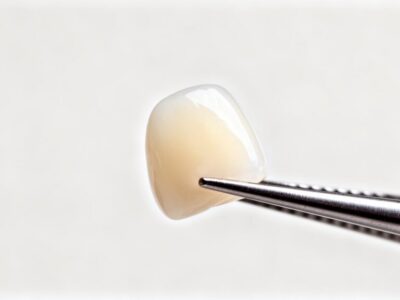
Two Calabasas practices can quote the same smile and land thousands of dollars apart, and neither one is being dishonest. The gap usually sits in what the number covers, which material is being used, and what has to happen to the teeth underneath before a single veneer is ever bonded.
A veneer quote is one of the few numbers in dentistry patients are expected to compare without being told what they are comparing. Published national figures span roughly $541 to $2,506 for a single tooth, according to cost data compiled by CareCredit, and that spread is not noise. It is four or five separate decisions stacked on each other, each of which moves the figure.
Here at Oaks Dental, we plan veneer cases with digital imaging and precise shade matching before any number is discussed, because the treatment plan is what sets the cost and not the other way round. A quote given before anyone has looked properly is a guess wearing a dollar sign.
If you are weighing up two quotes and want to understand what sits behind them, contact us or call (818) 431-2000.
This is what actually moves the number, and how to put two quotes side by side without guessing.
What a Veneer Actually Is, and What You Are Paying For
Before comparing figures it helps to be precise about the object being priced. A veneer is not a cap, a crown, or a cosmetic overlay you can take off. It is an irreversible alteration of the front of the tooth, and that is why the planning matters as much as the material.
The Thin Shell Bonded to the Front of the Tooth
The American Dental Association describes veneers as custom-made, natural-looking coverings for the teeth, and draws the line with crowns clearly: a veneer covers only the front surface, while a crown covers the whole tooth. That difference in coverage is a difference in purpose. A dental crown is a structural repair for a tooth that has lost too much of itself. A veneer is cosmetic resurfacing of a tooth that is basically sound.
When a quote seems unusually high or low, the first thing worth checking is whether the two practices are even pricing the same procedure.
Porcelain Compared With Composite Resin
The ADA describes porcelain veneers as strong, long-lasting and natural-looking but more expensive, and composite veneers as using a tooth-colored filling material that is easier to repair but less stain-resistant. Both are offered at our Calabasas practice, and the choice between them is clinical as much as financial.
Porcelain resists staining in a way composite does not, which matters for anyone whose coffee or red wine habit was part of why they are considering veneers in the first place. Composite is easier and quicker to repair when something chips. Those are different trade-offs, not better and worse.
Why the Treatment Is Not Reversible
This is the part that changes how you should read a low quote. The ADA states plainly that veneer treatment is not reversible because tooth enamel is removed. Once the front of the tooth has been prepared, it stays prepared, and the tooth will need a veneer or another restoration on it from that point forward.
That is not a reason to avoid veneers. It is a reason to be certain about the plan, the material, and the person doing the work before anything is prepared.
The Factors That Move a Veneer Quote Up or Down
CareCredit’s cost guide names the variables directly: the veneer type, the materials used, the geographical location, the complexity of the procedure, the dental exams and cleanings involved, and whether the veneers are part of a wider smile makeover. In practice those collapse into four things you can actually ask about.
The Material and Where the Veneer Is Made
This is the single largest lever. Using CareCredit’s national figures, a porcelain veneer averages $1,455 per tooth within a range of $1,020 to $2,506. A lab-manufactured composite veneer averages $1,068, ranging from $783 to $1,760. A composite veneer made chairside in the dentist’s own office averages $751, ranging from $541 to $1,220.
The chairside and lab versions of the same material are not the same product. Lab fabrication adds a technician, a turnaround and a level of finish, and the figures reflect that.
The Number of Teeth in the Plan
A single veneer on one visible tooth is a different problem from six or eight across the smile line. The wider case is not simply the per-tooth number multiplied out, because the teeth have to work together in shade and proportion. Matching one veneer to seven natural teeth is harder than matching eight veneers to each other, and a single-tooth quote carries that difficulty.
The Condition of the Teeth Underneath
The ADA is explicit that underlying dental problems must be treated before veneers, and this is where two quotes most often diverge without either practice saying so. Decay, gum problems, or a tooth needing a root canal all have to be dealt with first, and whether that sits inside the number or is billed separately is up to how each practice writes its plan.
Where the Practice Is and What It Costs to Run
Geography is on CareCredit’s list for a reason. A national average is an average across the whole country, and Calabasas sits in a high-cost part of California. A local figure above that average is not automatically inflated, and one far below it is worth asking about rather than celebrating.
The Costs That Sit Outside the Per-Tooth Number
The per-tooth figure is the headline, and it is rarely the whole bill. These are the line items that most often surprise people, and all three are reasonable charges rather than hidden ones.
Consultation, Imaging, and Shade Planning
A veneer case begins with an examination and a plan, not with a drill. Digital imaging and shade selection are how the result gets designed before anything is irreversible, and CareCredit lists exams and cleanings among the cost factors for that reason. Ask whether the consultation and imaging sit inside the quoted figure or are invoiced separately.
Treating What Is Already Wrong First
If a tooth in the smile line needs restorative work, that work is its own treatment with its own cost. It is worth asking for the preparatory work and the veneers to be itemized separately, so the comparison between two practices is like for like. Our full range of dental services covers the preparatory side as well as the cosmetic one, which is usually easier than coordinating two offices.
Whitening Sequence, Nightguards, and Repairs
Two practical items nobody thinks to ask about. First, veneers do not change color afterward, so any teeth whitening on the surrounding natural teeth belongs before the shade is locked in, not after. We cover why in our guide on what actually removes yellow staining.
Second, the ADA notes that veneers may not suit people who clench or grind their teeth, and that a veneer may chip, crack, wear down or loosen over time, requiring a dentist to re-bond, repair or replace it. If grinding is part of your history, a nightguard is part of the real cost of the case.
How to Compare Two Veneer Quotes Without Guessing
With the variables named, a comparison becomes straightforward. Start from the published national figures, then work through three checks.
| Option | National cost per tooth | Where it tends to fit |
|---|---|---|
| Composite, made chairside | $751 average, $541 to $1,220 | Smaller corrections, and cases where a single visit and easy repair matter more than stain resistance |
| Composite, lab-manufactured | $1,068 average, $783 to $1,760 | Cases wanting lab finish and little to no enamel removal, accepting a shorter service life than porcelain |
| Porcelain | $1,455 average, $1,020 to $2,506 | Multi-tooth smile-line cases where stain resistance and length of service are the priority |
Figures are CareCredit’s published national averages and ranges. They are a reference point for reading a quote, not a price list, and no case should be expected to land on an average.
Check That the Same Material Is Being Quoted
A porcelain quote and a chairside composite quote are separated by roughly $700 per tooth at the national average, which across six teeth is over $4,000 of apparent difference that is really a difference in product. Ask which material, and ask whether it is made in a laboratory or in the office.
Check What the Number Actually Covers
Ask each practice the same four questions. Does it include the consultation and imaging? Any preparatory treatment the teeth need? A nightguard if one is indicated? And what happens, practically and financially, if a veneer chips in the first year? An itemized plan answers all four at once.
Check the Cost Across the Years, Not the Visit
This is the check that changes decisions. CareCredit’s guide puts composite veneers at five to seven years with proper care and porcelain at 10 to 20 years or more. Taking the averages, a porcelain veneer works out lower per year of service than a chairside composite one, despite costing roughly twice as much on the day. Which is the better use of your money depends on your goals and your timeframe, and that is a conversation to have at an exam rather than a rule.
What This Means for Your Calabasas Smile
If you have two quotes in front of you and they differ by thousands, the difference is almost certainly explainable, and it is usually one of the four things above. The practice that can tell you which one, in writing and itemized, is the one giving you a real number.
At Oaks Dental, a veneer conversation starts with an examination, digital imaging, and a written plan, because an honest figure is downstream of an honest diagnosis. Dr. Kourosh Keihani has practiced for nearly three decades, and these are not temporary pop-on veneers but a treatment that changes the tooth for good, which is why we would rather spend the time before than explain it after.
To discuss veneers in Calabasas and get an itemized plan you can actually compare, call us today on (818) 431-2000.
Medical Disclaimer: This content is provided for general informational purposes only and does not substitute for an in-person evaluation by a licensed dentist. Veneers are an elective cosmetic procedure, candidacy depends on a clinical examination of your teeth and gums, and individual results vary based on oral health, anatomy, bite, habits such as clenching or grinding, and the treatment plan. Every cost figure cited here is a third-party national average published by CareCredit and is not a quote, an estimate, or a statement of fees at any particular practice. Reading this page does not create a dentist-patient relationship.
Frequently Asked Questions
What is the cheapest way to get veneers in Calabasas?
The lowest figure on the published national data belongs to composite veneers made chairside in the dentist’s office, which CareCredit puts at an average of $751 per tooth against $1,455 for porcelain. The more useful comparison is cost across the years of service, since the same source puts composite at five to seven years and porcelain at 10 to 20 years or more with proper care. Which route makes sense depends on how many teeth are involved, the condition of the teeth underneath, and your own timeframe, all of which need an examination to establish.
How much do veneers cost per tooth?
CareCredit’s national figures put a single veneer at an average of $1,455 within a range of $1,020 to $2,506, with composite options averaging lower at $1,068 for lab-manufactured and $751 for chairside. Those are national averages across the whole country rather than local figures. A quote in a high-cost area such as California sitting above a national average is not by itself a sign of anything.
How much does a full set of veneers cost?
There is no single answer, because a full set means different numbers of teeth to different people, most commonly six to ten across the visible smile line. Multiplying a per-tooth average is the wrong way to estimate it, since a multi-tooth case involves shade and proportion planning across the whole set and may involve preparatory treatment on some teeth and not others. Ask for an itemized plan naming the exact number of teeth.
How much do veneers cost with insurance?
CareCredit states that veneers are not usually covered by insurance because they are considered an elective cosmetic procedure, and the ADA makes the same point. Coverage sometimes applies where a restoration is clinically necessary rather than cosmetic, but that depends entirely on your policy and the clinical findings. Ask your carrier for a pre-treatment estimate rather than assuming either way.
How much do composite veneers cost?
Composite veneers split into two figures depending on where they are made. CareCredit puts a lab-manufactured composite veneer at an average of $1,068, ranging from $783 to $1,760, and a composite veneer made chairside in the office at an average of $751, ranging from $541 to $1,220. Composite is easier to repair than porcelain but less stain-resistant, which is the trade-off behind the price difference.
How much do no prep veneers cost?
No-prep and minimally invasive veneers are generally the lab-manufactured composite category, which CareCredit averages at $1,068 per tooth. The distinguishing feature is that they are much thinner and require little to no enamel removal, unlike traditional veneers which involve removing a small amount of enamel so they fit properly. Whether your teeth suit a no-prep approach is a clinical question rather than a preference, and it is answered at an examination.
How long do veneers last?
CareCredit’s cost guide puts composite veneers at five to seven years with proper care and porcelain veneers at 10 to 20 years or more. The ADA adds the practical caveat that a veneer may chip, crack, wear down or loosen over time and need re-bonding, repair or replacement, and that you can still get cavities under or around one. Longevity depends heavily on habits, so avoiding nail biting and hard foods, wearing a mouthguard for sport, and keeping up normal brushing and cleaning between the teeth all matter.
Is it worth getting veneers done abroad to save money?
Traveling for dental work is a personal decision and this is not the place to make it for you, but two practical points are worth weighing. Veneer treatment is not reversible because enamel is removed, so the teeth will need a restoration on them from that point forward regardless of who placed the first one. And the ADA notes that veneers can chip, loosen or need replacing over time, which raises a straightforward question of who handles the follow-up, the adjustments and the repairs, and what that costs once you are home.
 Calabasas Teeth Whitening: What Actually Removes Yellow Staining