
Last Updated: October 29, 2026
Table of Contents
- What Does the Research Say About Dental Implants and Autoimmune Disease?
- Which Autoimmune Conditions Have Been Studied With Implants?
- Why Do Medications Matter for Implant Planning?
- How Does an Implant Consultation Account for Your Health?
- Talk to Us About Implants and Your Health History
- Frequently Asked Questions
An autoimmune disease is a condition in which the immune system attacks the body’s own healthy cells and tissues by mistake. Having one does not automatically rule out dental implants: two 2025 research reviews found favorable implant survival in patients with autoimmune conditions, while also pointing to factors that need careful planning.
According to MedlinePlus, a service of the National Library of Medicine, there are more than 80 types of autoimmune diseases, and millions of Americans of all ages live with one. Type 1 diabetes and rheumatoid arthritis are two of the examples it lists.
If you live with one of these conditions and you are missing a tooth, you may have heard that implants are not an option for you. The research tells a more detailed story, and your own answer depends on your health, your medications and an in-person evaluation.
Here at Oaks Dental in Calabasas, we plan each implant from an exam and 3D imaging, and we are happy to talk through your health history with you. You can reach our team at (818) 431-2000.
If you would like to start that conversation, contact us and tell us a little about your health history before your visit.
What Does the Research Say About Dental Implants and Autoimmune Disease?
Two reviews published in 2025 looked at dental implants in people with autoimmune diseases, and both reported generally favorable implant survival. Both also note that the evidence comes mostly from smaller or lower-level studies, so the findings guide planning for groups of patients and cannot predict what will happen for any one person.
The first is a systematic review and meta-analysis in the Journal of International Society of Preventive and Community Dentistry. It pooled 14 observational studies with 2,657 participants and found that implant survival rates ranged from 76.4% to 100% across autoimmune conditions.
Its authors concluded that dental implants demonstrate favorable survival in autoimmune patients, and that tailored treatment planning and follow-up are essential. They also called for more high-quality studies to confirm the risks for specific diseases.
The second is a scoping review in Clinical Oral Implants Research that gathered 87 studies, most of them case reports and retrospective studies. It reported an overall implant survival rate of 85.3% to 100% and described implant treatment in these patients as generally predictable after mid-term follow-up.
The same review is clear about its limits. Its authors wrote that only low-level scientific evidence was available, and that the results should be interpreted with caution because high-quality studies are sparse.
It also found that many of the implant losses it recorded happened early, before the replacement teeth were attached. Across the studies, between 46.7% and 100% of implant losses were early losses, which is one reason the healing phase gets close attention in planning.
Which Autoimmune Conditions Have Been Studied With Implants?
The reviews cover a range of conditions, from rheumatoid arthritis and Sjögren’s syndrome to oral lichen planus, type 1 diabetes, hypothyroidism and Crohn’s disease. The findings differ by condition, and some conditions have very few studies behind them, so the disease you have matters to how your dentist plans treatment.
The scoping review grouped the conditions into three families: autoimmune connective tissue diseases, autoimmune diseases with signs in the mouth such as oral lichen planus and bullous diseases, and other autoimmune diseases such as type 1 diabetes, hypothyroidism and Crohn’s disease.
Rheumatoid Arthritis
Rheumatoid arthritis is one of the better-studied conditions. The 2025 meta-analysis found that patients with rheumatoid arthritis showed significantly increased marginal bone loss, which is the loss of bone around the top of the implant.
The scoping review reached a similar point. Its authors wrote that patients with rheumatoid arthritis may suffer increased crestal bone loss, and they suggested that higher use of glucocorticoids in this group may play a part.
For a patient, this points to follow-up care. Regular checks of the bone and gums around an implant help your dentist catch changes early.
Sjögren’s Syndrome
In the 2025 meta-analysis, the authors found no significant difference in marginal bone loss for patients with Sjögren’s syndrome.
The scoping review noted one prospective study of patients with secondary Sjögren’s syndrome that reported a lower implant survival rate of 87%. With so few studies, it is a question your dentist will want to look at closely for your own case.
Oral Lichen Planus and Other Mucosal Conditions
Some autoimmune diseases show up in the lining of the mouth. The scoping review found that patients with these mucosal conditions seem to benefit from implant-supported teeth, provided the lesions in the mouth are well treated.
Timing matters here. One study in the review lost 42 of 55 implants in patients with an untreated flare-up of oral lichen planus, and the authors wrote that placing implants during a flare-up of oral lichen planus cannot be recommended.
Why Do Medications Matter for Implant Planning?
Many autoimmune conditions are treated with medications that can affect bone, healing or infection risk, so your medication list is part of implant planning. The reviews point to glucocorticoids and certain bone medications as the drugs that most often come up, and the scoping review also stresses that controlling the disease itself matters.
Glucocorticoids, a group of steroid medications, were the most common immunosuppressants in the scoping review. The meta-analysis notes that corticosteroids impede the function of bone-building cells and increase bone breakdown, and the scoping review notes that long-term, high-dose immunosuppressive therapy may increase the risk of infection.
The scoping review also raises a caution about medication-related osteonecrosis of the jaw (MRONJ), a complication linked to antiresorptive bone medications. Its authors wrote that patients with autoimmune diseases receiving implants may be at increased risk, though the studies reported medication use too inconsistently for firm conclusions.
None of this means you should change a medication on your own. In fact, the scoping review’s authors suggest that getting the disease into remission before implant treatment seems more critical than the potential risk from glucocorticoids themselves. Any change to your medicines is a decision for you and the physician who prescribes them.
How Does an Implant Consultation Account for Your Health?
An implant consultation looks at your mouth and your overall health together. Your dentist reviews your medical history and medications, examines your gums and bone with imaging, and may want input from your physician, so the plan reflects your condition, how well it is controlled and how your body is likely to heal.
Your Medical History and Disease Control
The ADA notes that your health is more of a factor than your age for implants, and that chronic illnesses such as diabetes or leukemia may interfere with healing after surgery. It also notes that tobacco use can slow healing.
Our implant page lists uncontrolled diabetes among the medical conditions that can affect healing and how an implant bonds to the bone, along with gum disease, smoking and teeth grinding. Telling us about your diagnosis, recent flare-ups and current treatment helps us plan the timing of each step.
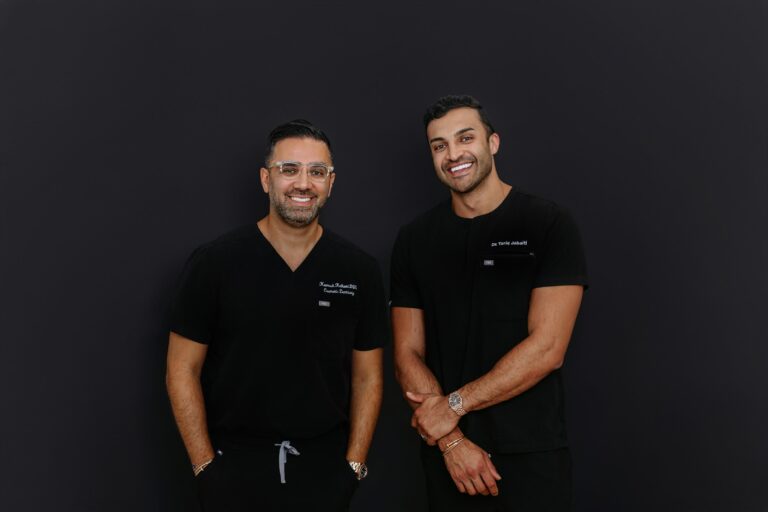
Our dentists, Dr. Keihani and Dr. Jabaiti, are introduced on our Meet the Doctors page, and you are welcome to ask either of them how your condition fits into an implant plan.
Your Medications and Your Physician
Bring a complete list of your medications to the consultation, including steroids, immunosuppressants, biologics and any bone medications. The reviews above show why each of these can matter to bone and healing.
The ADA also notes that you may be medically evaluated by a physician before implant surgery. For a patient with an autoimmune disease, that often means involving the doctor who manages the condition, so both sides of your care are working from the same information.
3D Imaging and Bone Health
At Oaks Dental, the implant process begins with a thorough consultation using X-rays and 3D scans to assess your bone health, gum condition and treatment needs. From there, we create a customized plan that outlines the number of implants, whether bone grafting is needed, and the type of tooth replacement.
Our dental implants page walks through each step, and if you are also weighing the financial side, our post on what a dental implant costs in Calabasas explains what each stage adds to the price.
If a damaged tooth has to come out before an implant, our post on what a tooth extraction costs in Calabasas explains that step, and our post on what a dental crown costs in Calabasas covers the crown that tops a finished implant.
Talk to Us About Implants and Your Health History
Living with an autoimmune disease adds questions to any treatment decision, and implants are no exception. The research gives reason for cautious optimism, and the right plan for you comes from an exam, imaging and a clear picture of your health.
If a damaged tooth can still be saved, our post on putting off a root canal explains what is at stake.
At Oaks Dental, we take the time to understand your health history and explain each option in plain language, so you can decide on a plan with confidence.
Call us to schedule a consultation and talk through implants and your health history with our team.
Medical Disclaimer: This content is provided for general informational purposes only and does not substitute for an in-person evaluation by a licensed dentist or for advice from your physician. Research findings describe groups of patients and cannot predict an individual outcome. Do not start, stop or change any medication without talking to the doctor who prescribes it. Reading this page does not create a dentist-patient relationship.
Frequently Asked Questions
Can you get dental implants if you have an autoimmune disease?
Many people with autoimmune diseases can, but it depends on the person. A 2025 meta-analysis of 14 studies found implant survival rates of 76.4% to 100% across autoimmune conditions, and a 2025 scoping review of 87 studies reported 85.3% to 100%. Both note that the evidence is limited. In Calabasas, Oaks Dental reviews your medical history, medications and 3D imaging before recommending a plan.
What disqualifies you from getting dental implants?
There is no single list that applies to everyone. The ADA notes that your general health is more of a factor than your age, and that chronic illnesses such as diabetes or leukemia, and tobacco use, can interfere with healing. For autoimmune conditions, the 2025 scoping review advised against placing implants during an untreated flare-up of oral lichen planus. An in-person exam is what settles the question for you.
Does rheumatoid arthritis affect dental implants?
Research suggests it can affect the bone around an implant. A 2025 meta-analysis found significantly increased marginal bone loss in patients with rheumatoid arthritis, and a 2025 scoping review noted that these patients may suffer increased crestal bone loss, possibly linked to glucocorticoid use. Careful planning and regular follow-up visits help your dentist watch the bone and gums over time.
Does Sjögren’s syndrome affect dental implants?
The evidence is limited. A 2025 meta-analysis found no significant difference in marginal bone loss for patients with Sjögren’s syndrome, while a 2025 scoping review cited one study of patients with secondary Sjögren’s syndrome that reported 87% implant survival. Because so few studies exist, your dentist will look closely at your gums and bone before planning treatment.
Do medications affect dental implants?
Some can. The 2025 reviews note that corticosteroids can affect bone-building cells, that long-term, high-dose immunosuppressive therapy may raise infection risk, and that patients taking antiresorptive bone medications may be at increased risk of MRONJ. Bring a full medication list to your consultation, and never change a medication without your prescribing doctor.
When do implant problems usually happen?
In the 2025 scoping review of autoimmune patients, many implant losses happened early, before the replacement teeth were attached. Across the studies, between 46.7% and 100% of losses were early losses. That is why the healing phase, which our implant page puts at about 3 to 6 months for full osseointegration, gets close attention.
Should I talk to my doctor before getting implants?
It is a good idea. The ADA notes that you may be medically evaluated by a physician before implant surgery. If you have an autoimmune disease, the doctor who manages it can share how well the condition is controlled and which medications you take, which helps your dentist plan the timing and steps of treatment.
How long does the implant process take?
On our implant page, we note that initial healing usually takes about 1 to 2 weeks, and full osseointegration, where the implant bonds to the bone, takes 3 to 6 months. Bone grafting, extractions and the number of implants can lengthen that timeline, and your health history may affect when each step is scheduled.
 What Is the Average Cost of a Dental Implant in Calabasas?